
Introduction
In today’s highly competitive restaurant industry, efficiency, accuracy, and customer satisfaction are critical for success. Restaurants of all sizes—from small cafés and food trucks to large fine-dining establishments—must manage orders, payments, inventory, taxes, and customer information effectively. Traditional manual billing methods are no longer sufficient to meet the demands of modern customers who expect fast service, multiple payment options, and accurate receipts.
Restaurant billing software has emerged as an essential tool for restaurant businesses looking to streamline operations and improve profitability. It automates the billing process, reduces human errors, accelerates transactions, and provides valuable insights into business performance. By integrating billing, inventory management, sales reporting, and customer management into a single platform, restaurant billing software helps owners focus on delivering exceptional dining experiences.
This article explores restaurant billing software in detail, including its features, benefits, challenges, implementation strategies, and future trends.
What is Restaurant Billing Software?
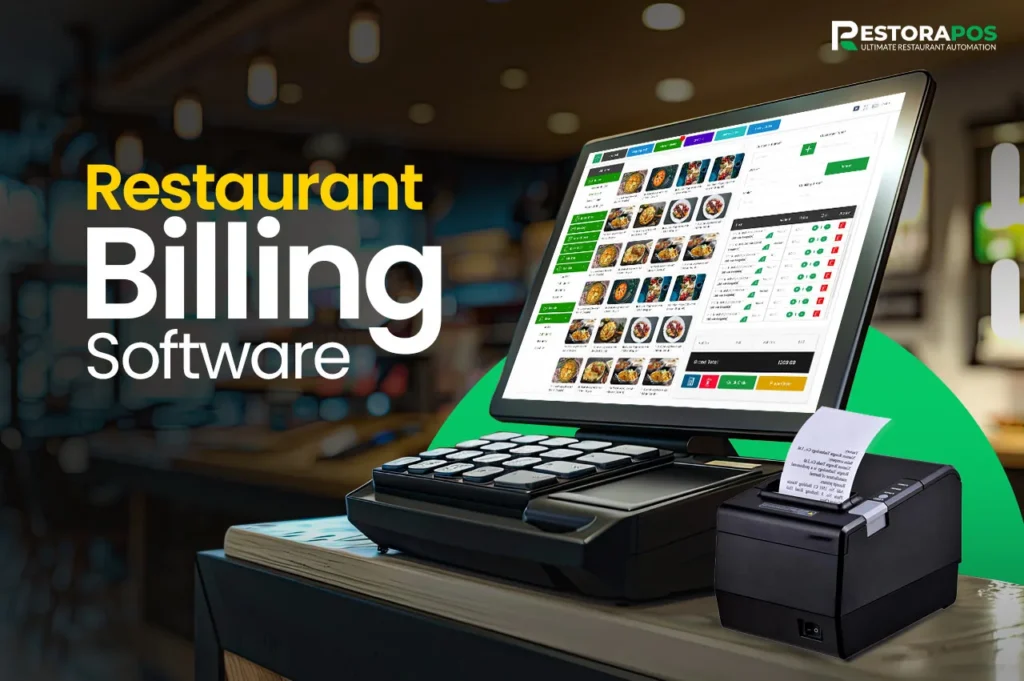
Restaurant billing software is a digital solution designed to automate billing and payment processes within a restaurant. It enables restaurants to generate invoices, calculate taxes, process payments, track sales, and manage customer orders efficiently.
Unlike traditional cash registers, modern restaurant billing software often integrates with Point of Sale (POS) systems, kitchen management systems, inventory tracking tools, and customer relationship management (CRM) platforms. This integration creates a seamless workflow from order placement to payment collection.
The software can be used on desktops, tablets, smartphones, or dedicated POS terminals. It supports various payment methods, including cash, credit cards, debit cards, mobile wallets, QR code payments, and online transactions.
Why Restaurants Need Billing Software
The restaurant industry faces numerous operational challenges, including:
- High customer expectations
- Fast-paced environments
- Complex menu structures
- Inventory management issues
- Tax compliance requirements
- Employee management concerns
Manual billing processes can lead to errors, delays, and customer dissatisfaction. Restaurant billing software addresses these challenges by providing automation and real-time data access.
Some key reasons restaurants need billing software include:
Improved Accuracy
Manual calculations often result in mistakes. Billing software automatically calculates totals, taxes, discounts, and service charges, ensuring accuracy.
Faster Service
Quick billing reduces waiting times and enhances customer satisfaction. Staff can process orders and payments efficiently.
Better Financial Control
Restaurant owners gain access to real-time sales data, helping them monitor revenue and expenses effectively.
Enhanced Customer Experience
Accurate billing and multiple payment options create a smoother dining experience.
Regulatory Compliance
The software helps restaurants comply with tax regulations by maintaining accurate financial records.
Key Features of Restaurant Billing Software
Modern restaurant billing software includes numerous features designed to optimize restaurant operations.
Point of Sale (POS) Integration
POS integration is one of the most important features. It allows staff to:
- Take orders
- Modify menu items
- Generate bills
- Process payments
- Track sales
All transactions are recorded automatically, reducing administrative work.
Table Management
Restaurants can manage seating arrangements and table availability in real time.
Features include:
- Table allocation
- Reservation tracking
- Occupancy monitoring
- Table status updates
This helps maximize seating efficiency and improve customer service.
Menu Management
Restaurant billing software allows easy menu customization.
Managers can:
- Add new items
- Update prices
- Create combo meals
- Manage seasonal menus
- Apply promotional offers
Changes are reflected instantly across all billing terminals.
Tax Calculation
Automatic tax calculations eliminate errors and ensure compliance with local regulations.
The software can:
- Apply different tax rates
- Generate tax reports
- Maintain tax records
- Support multiple tax structures
Multiple Payment Options
Modern customers prefer flexible payment methods.
Billing software supports:
- Cash payments
- Credit cards
- Debit cards
- Mobile wallets
- QR code payments
- Online payments
- Split billing
This flexibility improves customer convenience.
Discount and Coupon Management
Restaurants frequently offer promotions to attract customers.
The software can:
- Apply discounts automatically
- Manage coupon codes
- Track promotional campaigns
- Analyze campaign effectiveness
Receipt Generation
Professional receipts enhance the restaurant’s image.
Receipts may include:
- Order details
- Taxes
- Discounts
- Customer information
- Payment method
- Loyalty points
Digital receipts can also be sent via email or SMS.
Inventory Management Integration
One of the most valuable features of restaurant billing software is inventory integration.
Every sale automatically updates inventory levels.
Benefits include:
- Reduced wastage
- Better stock planning
- Real-time inventory tracking
- Low-stock alerts
- Supplier management
For example, if a customer orders a burger, the software automatically deducts the required ingredients from inventory records.
This automation helps restaurants maintain optimal stock levels and avoid shortages.
Customer Relationship Management (CRM)
Many restaurant billing systems include CRM functionality.
CRM features help restaurants:
- Store customer data
- Track purchase history
- Manage loyalty programs
- Send promotional messages
- Personalize customer experiences
For example, restaurants can identify frequent customers and offer exclusive rewards.
Customer retention becomes easier when restaurants understand customer preferences and behaviors.
Reporting and Analytics
Data-driven decision-making is essential for restaurant success.
Restaurant billing software provides detailed reports on:
Sales Performance
Owners can monitor:
- Daily sales
- Weekly sales
- Monthly revenue
- Annual growth
Popular Menu Items
The software identifies best-selling and low-performing dishes.
This information helps optimize menus and pricing strategies.
Employee Performance
Managers can evaluate:
- Sales per employee
- Order handling efficiency
- Shift performance
Inventory Reports
Inventory analytics help reduce waste and improve purchasing decisions.
Profitability Analysis
Restaurants can identify which menu items generate the highest profit margins.
These insights support smarter business decisions.
Benefits of Restaurant Billing Software
Increased Efficiency
Automation reduces manual tasks and allows staff to focus on customer service.
Order processing becomes faster and more accurate.
Reduced Human Errors
Mistakes in billing can negatively impact customer trust.
Automated calculations minimize errors in:
- Taxes
- Discounts
- Totals
- Inventory updates
Improved Customer Satisfaction
Fast billing and accurate transactions enhance the dining experience.
Satisfied customers are more likely to return and recommend the restaurant.
Better Revenue Management
Real-time sales monitoring helps restaurant owners identify opportunities to increase revenue.
Enhanced Security
Digital records provide greater security than paper-based systems.
Features often include:
- User authentication
- Access controls
- Data backups
- Audit trails
Scalability
Restaurant billing software can grow with the business.
Whether operating a single restaurant or multiple locations, the system can adapt to changing needs.
Types of Restaurant Billing Software
Cloud-Based Billing Software
Cloud-based solutions store data online.
Advantages include:
- Remote access
- Automatic updates
- Lower upfront costs
- Easy scalability
Restaurant owners can monitor operations from anywhere.
On-Premise Billing Software
On-premise systems are installed on local servers.
Benefits include:
- Greater control over data
- Offline functionality
- Customization options
However, they may require higher maintenance costs.
Mobile Billing Software
Mobile solutions operate on smartphones and tablets.
Benefits include:
- Portability
- Faster service
- Lower hardware costs
These systems are ideal for food trucks, cafés, and small restaurants.
Restaurant Billing Software for Different Business Types
Fine Dining Restaurants
Fine dining establishments require advanced features such as:
- Table reservations
- Course management
- Detailed customer profiles
- Premium reporting
Quick Service Restaurants (QSR)
QSRs focus on speed and efficiency.
Important features include:
- Fast order processing
- Self-service kiosks
- Online ordering integration
Cafés and Coffee Shops
Cafés benefit from:
- Loyalty programs
- Mobile payments
- Inventory tracking
Food Trucks
Food trucks require:
- Mobile billing
- GPS-based operations
- Offline functionality
Multi-Location Chains
Chain restaurants need centralized management capabilities.
Features include:
- Unified reporting
- Centralized inventory
- Franchise management
Integration with Online Ordering Systems
The growth of food delivery services has increased the importance of integration.
Restaurant billing software can connect with:
- Restaurant websites
- Mobile apps
- Delivery platforms
Benefits include:
- Automatic order synchronization
- Reduced manual entry
- Faster order processing
- Improved customer experience
All orders flow into a single dashboard, simplifying operations.
Challenges in Implementing Restaurant Billing Software
Despite its benefits, implementation may present challenges.
Staff Training
Employees must learn how to use the system effectively.
Proper training ensures smooth adoption.
Initial Investment
Some solutions require:
- Hardware purchases
- Software licenses
- Installation costs
However, long-term savings often outweigh initial expenses.
Data Migration
Restaurants switching from legacy systems may face data migration challenges.
Careful planning is essential to avoid disruptions.
Internet Dependence
Cloud-based systems rely on internet connectivity.
Restaurants should have backup plans for network outages.
Security Concerns
Restaurants must protect customer and payment information.
Strong cybersecurity measures are essential.
How to Choose the Right Restaurant Billing Software
Selecting the right software requires careful evaluation.
Understand Business Requirements
Identify your specific needs:
- Restaurant size
- Customer volume
- Budget
- Operational complexity
Evaluate Features
Choose software with features that align with your goals.
Avoid paying for unnecessary functionality.
Check Ease of Use
A user-friendly interface reduces training time and improves productivity.
Consider Scalability
Select software that can support future growth.
Review Customer Support
Reliable customer support is crucial for resolving technical issues quickly.
Compare Pricing
Analyze:
- Subscription costs
- Licensing fees
- Hardware expenses
- Maintenance charges
Focus on overall value rather than the lowest price.
Best Practices for Successful Implementation
Plan Carefully
Develop a clear implementation strategy before deployment.
Train Employees
Comprehensive training improves user adoption and reduces mistakes.
Test the System
Conduct testing before full deployment.
Monitor Performance
Track system performance and gather employee feedback.
Keep Software Updated
Regular updates improve security and functionality.
Maintain Data Backups
Backups protect business information from unexpected losses.
Future Trends in Restaurant Billing Software
Technology continues to transform the restaurant industry.
Several emerging trends are shaping the future of restaurant billing software.
Artificial Intelligence
AI-powered systems can:
- Predict customer preferences
- Forecast demand
- Recommend menu items
- Optimize inventory
Contactless Payments
Contactless payment methods are becoming increasingly popular.
Customers appreciate:
- Faster transactions
- Enhanced convenience
- Improved hygiene
Self-Service Kiosks
Many restaurants are adopting self-ordering kiosks.
Benefits include:
- Reduced labor costs
- Faster service
- Improved order accuracy
Voice Ordering
Voice-enabled systems may simplify ordering and billing processes.
Advanced Analytics
Future software will provide deeper business insights through predictive analytics and machine learning.
Integration with Smart Devices
Restaurants may increasingly use smart devices for:
- Inventory tracking
- Kitchen automation
- Customer engagement
The Role of Billing Software in Restaurant Growth
Restaurant billing software is more than just a payment tool. It acts as a central management system that supports business growth.
As restaurants expand, operational complexity increases. Managing multiple locations, larger inventories, and growing customer bases becomes difficult without automation.
Billing software helps businesses:
- Standardize operations
- Improve decision-making
- Increase profitability
- Enhance customer loyalty
- Support expansion strategies
Many successful restaurant chains rely heavily on advanced billing and POS systems to maintain consistency across locations.
Return on Investment (ROI) of Restaurant Billing Software
Investing in restaurant billing software often delivers substantial returns.
ROI benefits include:
Labor Savings
Automation reduces manual work and administrative tasks.
Reduced Errors
Accurate billing minimizes financial losses caused by mistakes.
Better Inventory Control
Reduced wastage directly improves profitability.
Increased Sales
Faster service allows restaurants to serve more customers.
Improved Customer Retention
Satisfied customers contribute to repeat business and long-term revenue growth.
In many cases, restaurants recover their investment within a relatively short period through improved efficiency and increased sales.
Conclusion
Restaurant billing software has become an indispensable tool for modern food service businesses. It simplifies billing operations, improves accuracy, enhances customer experiences, and provides valuable business insights. From small cafés to large restaurant chains, organizations of all sizes can benefit from adopting a reliable billing solution.
The software not only automates transactions but also integrates critical functions such as inventory management, reporting, customer relationship management, and online ordering. These capabilities help restaurants reduce costs, improve efficiency, and make informed business decisions.
As technology continues to evolve, restaurant billing software will become even more intelligent, incorporating artificial intelligence, advanced analytics, contactless payments, and automation features. Restaurants that embrace these innovations will be better positioned to compete in a rapidly changing market.
Ultimately, restaurant billing software is not merely a tool for generating bills—it is a strategic investment that drives operational excellence, customer satisfaction, and sustainable business growth. By choosing the right solution and implementing it effectively, restaurant owners can build a stronger, more profitable, and future-ready business.